






Blog

  • Best Pakistani Startups in 2025: Innovation & Digital Growth

    Best Pakistani Startups in 2025: Innovation & Digital Growth

    Best Pakistani Startups in 2025: Innovation & Digital Growth

    Introduction: A New Era for Pakistani Startups

    2025 has emerged as a breakthrough year for Pakistan’s startup ecosystem. From fintech to healthtech and edtech, Pakistani entrepreneurs are not only solving local challenges but also creating globally scalable solutions. With rising digital adoption, supportive government policies, and increased investor confidence, Pakistan has become one of South Asia’s most promising startup hubs.

    This digital transformation is fostering innovation across sectors and empowering a new generation of tech-savvy founders. Whether it’s revolutionizing finance for the unbanked or bringing healthcare to remote areas, these startups are making a real-world impact. Below, we explore the top Pakistani startups in 2025 that are setting benchmarks in innovation and digital growth.

    Global Economy Predictions

    🌟 1. Airlift Technologies: Reinventing Logistics and E-Commerce

    Airlift Technologies continues to lead the pack in 2025. After pivoting from mass transit to quick commerce, Airlift has now evolved into a full-fledged logistics and delivery solutions platform, serving both businesses and individuals. Its efficient supply chain management and last-mile delivery tech have attracted renewed funding and trust across the nation.

    The startup has expanded operations into tier-2 and tier-3 cities, ensuring rural communities can access e-commerce with the same convenience as urban centers. Their AI-powered fleet optimization tool has reduced delivery times by 40%, making them a game-changer in Pakistan’s retail supply chain.


    📚 2. Edkasa: Revolutionizing Digital Learning

    Edkasa is transforming education for millions of Pakistani students through its AI-powered e-learning platform. With the launch of their “Smart Prep” app in 2025, students preparing for board exams and university entry tests now have access to personalized study paths, real-time analytics, and interactive content in Urdu and English.

    In collaboration with regional education boards, Edkasa has also started offering hybrid learning models in under-resourced schools. The company’s impact goes beyond test prep—it’s reshaping the national discourse on digital literacy and equitable access to quality education.


    💳 3. SadaPay: Driving Financial Inclusion

    SadaPay has established itself as a fintech frontrunner in 2025, thanks to its commitment to transparency and innovation. Offering zero-fee digital banking services, the startup is now serving over 5 million users, including freelancers, students, and SMEs. Their newly launched “SadaBiz” platform helps small business owners track expenses, pay taxes, and manage payroll with ease.

    By leveraging Open Banking APIs and biometric verification, SadaPay is redefining financial inclusion in Pakistan. Their partnerships with global payment providers like Stripe and Mastercard have positioned them as a trusted bridge between local users and the global economy.


    🏥 4. Sehat Kahani: Empowering Healthcare Through Telemedicine

    Sehat Kahani continues to transform healthcare in 2025 by bridging the gap between patients and qualified female doctors via telemedicine. With over 50,000 consultations monthly and a network of 7,000+ healthcare professionals, it’s Pakistan’s largest digital health platform focusing on women-led care.

    The startup recently launched a wearable device for chronic illness monitoring, synced with their mobile app. This integration allows patients in rural areas to receive real-time care without frequent hospital visits, lowering costs and improving outcomes dramatically.


    🧠 5. Neurostic: Pioneering Healthtech Innovation

    Neurostic has made international headlines in 2025 by advancing neurorehabilitation and prosthetic technology. Based in Lahore, the startup develops affordable brain-computer interfaces (BCIs) and smart prosthetic limbs tailored for South Asian markets. Their flagship product, a robotic arm controlled by neural signals, is now in clinical trials across Asia and Africa.

    By blending AI with neuroscience, Neurostic is not only pushing Pakistan into the healthtech limelight but also offering life-changing solutions to thousands of amputees and stroke patients. Their work is a testament to the country’s ability to lead in deep-tech innovation.


    💼 6. Bazaar Technologies: Digitizing Pakistan’s Retail Economy

    Bazaar Technologies is empowering over 1 million retailers across Pakistan with its B2B e-commerce and digital banking solutions. Through their intuitive mobile platform, shopkeepers can order inventory, manage finances, and access microloans—all from one place.

    In 2025, Bazaar introduced AI-driven demand forecasting tools and real-time inventory management for wholesalers. This shift has made the entire supply chain more efficient, reducing costs and improving profit margins for small retailers, who form the backbone of Pakistan’s economy.


    🔧 7. Bykea: Transforming Everyday Mobility and Payments

    Bykea has expanded far beyond bike rides and deliveries. In 2025, it functions as a super app for logistics, transport, payments, and utility bill processing. With new features like voice-based booking for non-tech-savvy users and micro-savings for gig workers, Bykea is setting a new standard for inclusive urban mobility.

    The company also launched an electric bike fleet, reducing their carbon footprint while offering lower fares. This green transformation positions Bykea as both a socially responsible and commercially viable brand in Pakistan’s rapidly urbanizing cities.


    📈 8. Dastgyr: Reshaping B2B Wholesale

    Dastgyr is reimagining wholesale procurement for small retailers through its mobile-first B2B marketplace. The startup uses AI to match retailers with reliable suppliers and optimize purchasing based on demand trends. In 2025, it expanded into agri-supply and FMCG sectors, opening new verticals for rural entrepreneurs.

    With seamless logistics, embedded financing, and transparent pricing, Dastgyr offers a one-stop-shop solution. Their model improves inventory turnover and boosts profitability for mom-and-pop stores, making them vital contributors to Pakistan’s informal economy.

    Awesome! Here’s the updated version of your article with a dedicated section on Maati Tech, keeping the same tone, SEO optimization, structure, and human-like flow:


    🖥️ 9. Maati Tech: Shaping the Future of Web Development in Pakistan

    Maati Tech has carved out a stellar reputation in 2025 as one of Pakistan’s top-performing IT startups. With over 12 years of experience, this Lahore-based company specializes in custom, dynamic, and performance-optimized websites tailored for both local and international clients. What sets Maati Tech apart is its all-in-one digital strategy model—combining WordPress development, SEO, social media marketing, and graphics design under one roof.

    In 2025, Maati Tech introduced a new AI-integrated web builder tailored for SMEs looking to launch fast, SEO-optimized sites without compromising quality. The company’s commitment to innovation, timely delivery, and transparent pricing has not only retained major clients but also attracted global partnerships. From e-commerce to enterprise solutions, Maati Tech is proving that Pakistani IT firms can deliver world-class digital services.


    💡 Actionable Insights for Founders & Investors

    • Local problem-solving wins: Each successful startup in 2025 is addressing a uniquely Pakistani challenge with scalable tech-driven solutions.
    • Think beyond metros: Rural digital expansion is the new frontier. Startups targeting tier-2 and tier-3 cities are gaining momentum and trust.
    • Focus on inclusion: Whether through financial services, education, or healthcare, inclusive innovation is driving sustainable growth.

    ❓ FAQs: Best Pakistani Startups in 2025

    Q1: What is the top Pakistani startup in 2025?
    Airlift Technologies and SadaPay are among the top-performing startups in 2025 due to their innovative tech and strong user growth.

    Q2: Which sectors are booming in Pakistan’s startup ecosystem?
    Fintech, healthtech, edtech, and B2B logistics are the fastest-growing sectors in Pakistan’s startup space.

    Q3: Are Pakistani startups attracting international investment?
    Yes, 2025 has seen a surge in foreign VC funding, especially in companies like Neurostic, Edkasa, and Bazaar Technologies.

    Q4: What makes Pakistani startups unique?
    They blend deep local insight with scalable digital solutions, often targeting underserved populations with inclusive innovation.

    Q5: What is Maati Tech and why is it on the list of top startups?
    Maati Tech is a Lahore-based IT company known for delivering high-quality web development, SEO, and digital marketing solutions. In 2025, its AI-powered web solutions have made it a standout startup.


    💬 Final Thoughts & Call-to-Action

    Pakistan’s startup ecosystem in 2025 is a powerful reflection of what happens when innovation meets necessity. The country’s young, tech-savvy population and increasing digital connectivity have created fertile ground for scalable, impactful ventures. Whether you’re an aspiring founder, an investor, or a tech enthusiast—this is the perfect time to get involved.

  • Pakistani Tech Firms Partner with Google Cloud to Drive AI & Digital Transformation

    Pakistani Tech Firms Partner with Google Cloud to Drive AI & Digital Transformation

    Pakistani Tech Firms Partner with Google Cloud to Drive AI & Digital Transformation

    Karachi/Islamabad, July 4, 2025 —
    In a major move to accelerate Pakistan’s digital evolution, Starlight Retail has joined Google Cloud’s Partner Advantage Program to deliver advanced AI, data analytics, and cybersecurity solutions tailored for local businesses.

    What’s New

    As a Premier Partner, Starlight Retail will leverage Google Cloud’s technologies to offer scalable SaaS platforms, secure cloud migrations, and intelligent analytics to sectors across Pakistan. The collaboration aims to help enterprises adopt modern IT infrastructure, protect digital assets, and make data-driven decisions.

    Why It Matters

    • Digital Upscale – With growing interest in AI and cloud services, this partnership accelerates Pakistan’s transition from legacy systems to intelligent, cloud-native operations.
    • Trust & Security – Google Cloud’s enterprise-grade cybersecurity features, combined with Starlight’s regional expertise, strengthen trust for digital adoption.
    • Empowering SMEs – Small and mid-sized companies gain access to affordable, scalable tools, leveling the playing field in digital competitiveness.

    Broader Trends

    This development aligns with Pakistan’s broader push into digitalization—as seen with the setup of the Pakistan Crypto Council, growing IT exports, and a $700 million inflow into IT from foreign investors earlier this year.
    Countries leveraging cloud and AI partnerships are reporting faster business agility and boosted foreign investment – and Pakistan looks to follow suit.


    Looking Forward

    • Rollout Timeline: Pilots will begin Q4 2025, with scale-up plans into SME sectors and government digital services.
    • Talent Push: Joint training programs in cloud architecture and AI are expected soon, aimed at building capacity in Pakistan’s emerging tech workforce.
    • Extended Impact: Similar initiatives in healthcare, education, and finance could follow, widening the scope of cloud-driven transformation.
  • Women can wait years for an endometriosis diagnosis. New tech could change that

    Women can wait years for an endometriosis diagnosis. New tech could change that

    For thousands of women, getting an endometriosis diagnosis can take years. Now, a new scan technique may help spot the condition earlier, a pilot study at Oxford University suggests.

    The technique uses specialised CT scans combined with a molecular tracer to detect areas of early endometriosis, which is often missed by conventional scans.

    If confirmed in larger studies, this could help give women an explanation for their symptoms earlier on, scientists say.

    Endometriosis affects one in 10 women in the UK and is often a painful condition in which cells similar to those lining the womb grow elsewhere in the body. It can take an average of nine years to get a diagnosis.

    Symptoms can be severe and wide-ranging – from very heavy periods to extreme tiredness and abdominal pain – often mimicking other conditions.

    People frequently end up undergoing several tests, including ultrasounds and sometimes MRI scans.

    But these standard scans do not always pick up on the disease and mainly detect changes that often appear with more advanced diseases, says Dr Tatjana Gibbons, lead researcher on the study.

    “This means many struggle with symptoms, despite being told they have normal imaging results.

    “Getting a diagnosis earlier can help people make decisions and plans about their life,” Dr Gibbons adds.

    ‘A very long journey’

    Gabriella Pearson, co-founder of the charity Menstrual Health Project, was diagnosed with endometriosis aged 23, after more than 10 years of worsening symptoms and a number of misdiagnoses.

    The 33-year-old says that if she had been “listened to and diagnosed earlier she would have been in a very different position now”.

    Gabriella Pearson Photo of a lady with long blonde hair wearing a white top. She is smiling.

    Endometriosis has affected her bowel, bladder and ovary and left her with lasting damage.

    “Because of the pain and the complications I wasn’t able to progress with my career and go to university,” says Pearson.

    “There is a knock-on effect in terms of mental health, finances, work and fertility. So I think if people are diagnosed earlier and have a better chance of prolonged quality of life at a younger age, it could really help.”

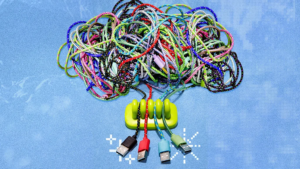
  • Your bad habits are destroying your charging cables

    Your bad habits are destroying your charging cables

    Charging cables are the most overlooked technology in your life, until they break and you’re stuck with a dying phone. You’re the reason they keep failing. Here’s how to take better care of them.

    Michael Pecht tortures charging cables. He’s the founder of the Center for Advanced Life Cycle Engineering at the University of Maryland, a laboratory where tech companies send gadgets to learn why they break. “We’re like the morgue,” Pecht tells me, “but for electronics”.

    His team has subjected USB cables to unspeakable horrors, smashing, stretching, plugging them in too many times, you name it. As if that isn’t enough indignity, he sticks the busted cables under X-rays to study the damage.

    I called Pecht with what I thought was a simple question: what’s the perfect way to wrap a charging cable? My whole life, I believed you need to wrap your cables in loose concentric circles – not too tight! – because over constricting or tangling is a shortcut to ruined wires. It’s an extremely common idea among people I know, so I expected to hear a bit of science to support my cable wrapping technique. Instead, I found that I – and probably millions of other people too – have been wasting our time.

    “It just doesn’t matter,” says Pecht. “We’ve done work for some of the big computer companies, the ones you’re thinking of when I say that. We’ve never seen any failures from wrapping them up wrong.”

    This was so difficult to square with my cable philosophy that I contacted other experts, who all told me the same thing: wrap your charging cables however you want. There are, however, some other bad habits that have been shortening the lifespan of my cables. Things I’ve been doing every day for decades. My poor wires. I wish I’d known.

    The good news is I’m here to share what I learned so you can stop making the same mistakes I did. Our cables work hard for us, but we rarely realise until they stop working and we are left without a way of charging our devices. Don’t they deserve a little respect? If you aren’t convinced, then know that caring for your cables is better for your wallet and the environment too.

    Be nice to your cables

    “There’re two types of people in this world: people who destroy cables and people who don’t,” says Kyle Weins, co-founder of iFixit, a sustainability and consumer rights company that helps people repair their own electronics. It’s painful to admit it, but I think I’m in the destructive group. “When cables break, it’s almost always because it fails where the cable meets the plug.”

    If you find yourself lying in bed with your phone plugged in, pulling the connector at a sharp angle to keep using it, you’re asking for troubleReady for an anatomy lesson? Your cables are full of little metal wires wrapped with insulation. On the far end, they thread into a connector with a plug at the end. That joint is where things go wrong. It makes sense if you think about it. When you’re using a cable, the connector acts like an anchor, and all the bending happens right at the end of the wire. 

    Imagine a paper clip. Bend it at the same point over and over and it breaks. “On a microscopic level, bending beyond the elastic range makes the bonds between the atoms break and reform as they shift positions,” says Robert Hyers, head of the mechanical and materials engineering department at Worcester Polytechnic Institute in the US. “You get this accumulation of defects called dislocations where the atoms don’t line up, like wrinkles in a rug.” Too many dislocations hardens the metal, then it snaps, and your paper clip is ruined. The metal wires inside a cable work the same way.

    Hopefully you’ll feel bad enough for those atoms to avoid some of these common problems. “One thing a lot of people do, including me sometimes when I’m lazy, is just pull on the long part of the cable to unplug it,” Pecht says. “That’s causing additional stress where it wouldn’t if you just pulled on the connector itself.” 

    A key source of strife comes from cables that are too short for the job, Hyers says. If you’re stretching the cable out to make it reach a socket, you’re hurting it. Or, if you find yourself lying in bed (or anywhere else for that matter) with your phone plugged in, pulling the connector at a sharp angle to keep using it, you’re asking for trouble. 

    “Another thing we see people do is plug their phone in and then stick it in the cup holder in their car to prop it up,” says Weins. “So, the phone is sitting on the cable and all the pressure of the phone weight, including bouncing as you drive, is right on that point.” Stop it. That’s just cruel. 

    Serenity Strull/ BBC/ Getty Images The way you wrap your wires up doesn't matter for charging cables, but how you treat the plug at the end is crucial (Credit: Serenity Strull/ BBC/ Getty Images)
  • Finding ‘hidden sperm’: New technique offers hope to men previously told they were infertile

    Finding ‘hidden sperm’: New technique offers hope to men previously told they were infertile

    A new AI-powered technology is locating sperm cells in men who were told they had none – and giving couples who have been trying for years another chance at having children.

    It was early November 2025 when Penelope received a call whilst driving home from work in New Jersey in the US. It was her doctor, phoning with news she had been longing for. After an agonising two and a half years of trying, Penelope was finally pregnant.

    After many tests, Penelope and her husband Samuel had learned that he had Klinefelter syndrome, a genetic condition that affects males who are born with an extra X chromosome, often not diagnosed until adulthood. Most people with Klinefelter syndrome produce little or no sperm in their ejaculate, a condition known as azoospermia. About 10% of infertile men experience azoospermia.

    Bursting with joy and disbelief, Penelope waited until Samuel (both their names have been changed to protect their identity for privacy reasons) returned home that evening to share the news.

    “His face was just a wave of emotion,” she says. “He cried… just to finally get to that point, because it took so much effort, time and research. And the fact that we only had one embryo, and it worked, we were just over the Moon.”

    Their pregnancy was only made possible thanks to a new technique, known as the Star (Sperm Track and Recovery) system, developed by Columbia University to trace sperm in men with azoospermia. The system uses artificial intelligence to help identify and locate the few “hidden” sperm that men with this condition can have.

    “I was scared. I thought that I wasn’t going to be able to have my own kid, which is a really big part of my life,” says Samuel, who was told he had a 20% chance of having a biological child. “And that was a big slap in the face.”

    Infertility affects millions of people worldwide, with around one in every six people of reproductive age experiencing problems with getting pregnant at least once in their lifetime. Male infertility is a contributing factor in up to 50% of cases and 1% of all men are azoospermic.

    This means potentially millions of men worldwide have sperm counts so low that their individual spermatozoa are so hard to find that they are considered to be azoospermic. But the power of AI to find these hidden sperm could offer hope to those hoping to become parents.

    You’re trying to find that really rare sperm in a sea of all this other debris and cell fragments – Zev Williams

    At the end of last year, after five years in development, the first baby to be born using the Star system allowed a couple who had battled with infertility for almost two decades to finally have a child. It’s a moment Zev Williams, director of Columbia University Fertility Center, and his team remember well.

    “Everyone was just jumping up and down with joy,” he says. “There are so few things where the reward for all the effort that was put into it is something as wonderful and special as this. Now there’s a baby girl and hopefully, God willing, many, many more.” 

    Since the arrival of the first Star baby, the technology has been used regularly at the fertility centre, with the waiting list of people hoping to conceive growing to hundreds from all around the world. Based on the latest 175 patients to have used the technology, Williams says they are finding sperm in just under 30% of cases. These are individuals who had otherwise been told that they had no chance of having a baby using their own sperm.  

    In further tests, Star was able to find 40 times more sperm than a manual search by a trained human technician, according to Williams.

    Usually a semen sample has tens of millions of sperm per millilitre. A tiny droplet from a sample is examined under a microscope so sperm count can be estimated, while also looking for whether the sperm are moving and healthy. But in azoospermic samples, only a single sperm might be present in the entire sample – although in some cases there are none. Sifting through the sample, one tiny drop at a time, is impractical.

    Columbia University Fertility Center The AI-powered Star system can detect and extract a single sperm cell in just a few milliseconds as it flows through a tiny channel (Credit: Columbia University Fertility Center)

    Williams hit on the idea for the Star system in 2020 after reading about how AI is being used to find new stars.

    Modern telescopes produce an overwhelming amount of data of the night’s sky that is impossibly time consuming for human astronomers to analyse for objects that haven’t been seen before. But using machine learning algorithms can do this work in minutes.

    “The picture of the sky was very reminiscent of what we’re looking for, and what we see in men who are told they have no sperm,” says Williams. He began to ponder whether it would be possible to apply such technologies to identify and isolate sperm in the same way.

    He and his team were already using a high-powered imaging technology that could be used to scan the sample. The challenge was to analyse hundreds of images per second in real time to detect and extract any sperm that can be found.

  • Why AI companies want you to be afraid of them

    Why AI companies want you to be afraid of them

    They built it. They’re scared of it. They’re selling it anyway.

    Stop me if you’ve heard this one before: a tech company says it’s built a new AI that’s so powerful it’s scary. Apparently, it’s too dangerous to release into the world – the consequences would be catastrophic. Luckily for us, they are keeping it locked up for now. They just wanted you to know.

    That’s exactly what AI company Anthropic is telling us about its latest model, Claude Mythos. The company says Mythos’ ability to find cybersecurity bugs far surpasses human experts, and it could have world-altering consequences if similar technology lands in the wrong hands. “The fallout – for economies, public safety and national security – could be severe,” Anthropic said in an early April blog post. Some breathless observers warned that Mythos will soon force you to replace every piece of technology in your life, down to your WiFi-enabled microwave, to protect from the digital madness.

    Some security experts doubt these claims, but let’s set that aside. This isn’t new. Executives at leading AI providers regularly issue warnings about how their industry’s products may destroy humanity. Why do AI companies want us to be afraid of them?

    It’s a strange way for any company to talk about its own work. You don’t hear McDonald’s announcing that it’s created a burger so terrifyingly delicious that it would be unethical to grill it for the public.

    Here’s one theory. According to critics, it benefits AI companies to keep you fixated on apocalypse because it distracts from the very real damage they’re already doing to the world. Tech leaders say they’re just warning us about an inevitable future, and safety is a top priority whether it’s now or later. But others argue what we’re actually seeing is fear mongering, which exaggerates the potential of the technology and serves to boost stock prices. And it encourages a narrative that regulators must stand aside, because these AI companies are the only ones who can stop the bad guys and build this technology responsibly.

    “If you portray these technologies as somehow almost supernatural in their danger, it makes us feel like we are powerless, like we are outmatched,” says Shannon Vallor, a professor of the ethics of data and artificial intelligence at the University of Edinburgh in the UK. “As if the only people we could possibly look to would be the companies themselves.”

    Somebody stop me

    An Anthropic spokesperson told me the company has been clear about these issues. They shared blog posts from other organisations supporting Mythos’ cyber capabilities, but said nothing to address the points in this article, aside from one comment I’ll include below.

    This isn’t the first time Anthropic chief Dario Amodei has worked on a tool that’s been declared too dangerous for the public by the company he worked for. In 2019, when Amodei was an executive at OpenAI, the company announced GPT-2. He and other company leaders said they just couldn’t release GPT-2 because of “concerns about malicious applications of the technology”. This was a tool far less sophisticated than ChatGPT. And months later, they released it anyway. (OpenAI CEO Sam Altman published a blog post which says the company embraces uncertainty, acknowledging that fears about GPT-2 were “misplaced”.)